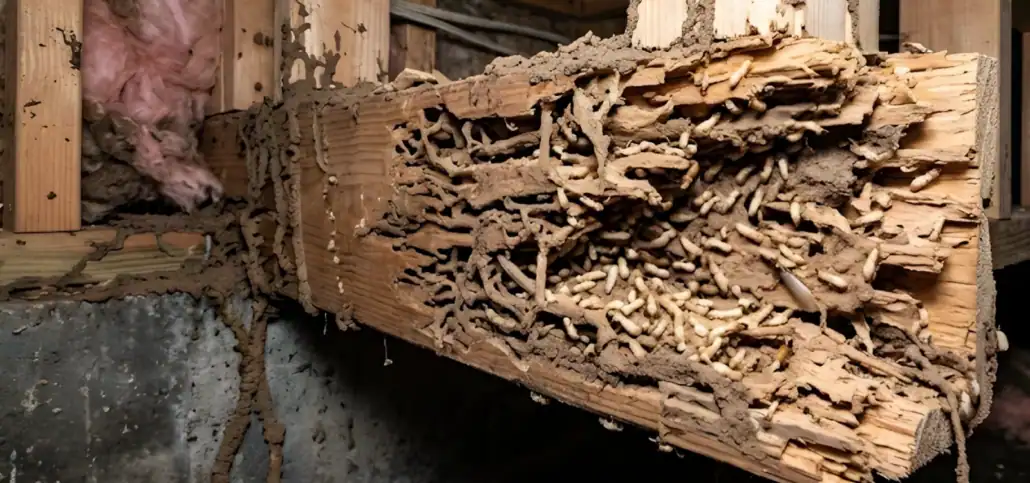
What Local Homeowners Need to Know about Termites
If you're a homeowner in Western PA or Eastern Ohio, termites probably aren't at the top of your worry list. But, they're more of a local issue than most people realize, and the damage they cause is almost always silent until it's expensive.
The Numbers Are Eye-Opening for Termite Infestations
- The National Pest Management Association (NPMA) estimates that termites cause more than $5 billion in property damage across the U.S. every year,
- Termites affect around 600,000 homes annually.
- The USDA puts total damage from termites and similar pests at $30 billion per year.
For individual homeowners, the average repair bill can run into the thousands, and it may not be covered by your insurance.
Yes, We Have Termites Here in PA and Ohio
Penn State Extension confirms that Eastern Subterranean Termites are present throughout all of Pennsylvania.
PA and Ohio homes are actually set up in ways that make termites quite comfortable:
Our basements are a prime target.
Penn State Extension notes that most termite infestations start in the basement and cellar areas, targeting the mudsills, floor joists, and structural timbers right above the foundation walls. That describes a huge percentage of homes in western Pennsylvania and Eastern Ohio.
Moisture is everywhere.
Termites thrive in damp conditions. Humid summers, older drainage systems, leaky pipes, and crawl spaces with poor ventilation all create the moisture environment termites love. Even a newer home can develop moisture issues over time.
Our housing stock is older.
Penn State Extension researchers note that termite problems typically emerge 10 or more years after construction, which puts a huge portion of houses in this region squarely in the risk window. Many homes in this region were built decades ago and have never had a professional termite inspection.
They don't stop in winter.
Subterranean termites live 7–10 feet underground, well below the frost line. They stay active through our cold winters, especially near heat sources like water heaters, furnaces, and pipes.
When are Termites most active?
In the Western Pennsylvania and Eastern Ohio area, termite swarms typically emerge from May through June — often on the first warm, rainy day of spring. If you've ever seen small winged insects near a window and assumed they were ants, it's worth a second look.
Checking Your Home for Signs of Termites
Termites consume wood from the inside out, so damage can be extensive before anything looks wrong. Look for:
- Mud tubes on foundation walls, basement posts, or along mudsills — these pencil-wide earthen tunnels are the clearest sign of active termites
- Piles of shed wings near windows or doors in spring
- Hollow-sounding wood when you knock on beams or floor panels
- Doors or windows that suddenly stick for no obvious reason
- Paint that bubbles or peels in a way that looks like water damage
If you spot any of these — especially mud tubes — don't wait. The damage is already underway.
Why DIY Termite Treatments Usually Don't Work
We completely understand the impulse to grab something off the shelf and handle it yourself. But here's the honest truth: research shows DIY termite treatments succeed only 20–40% of the time against subterranean termites, while professional treatments achieve 90%+ success rates.
Don't Wait Until You See Damage
By the time termites become visible, the colony has typically been active for years. The best protection is a professional inspection before anything looks wrong— especially if your home is more than 10 years old, has a basement, or has never been inspected.
Whether you're in Western PA or Eastern Ohio, the team at Expert Pest Management is here to help. We'll take a look, tell you honestly what we find, and make sure your home is protected.
Schedule your termite inspection today!
Call Expert Pest Management today for an inspection and customized termite control plan.