Flies
Biology
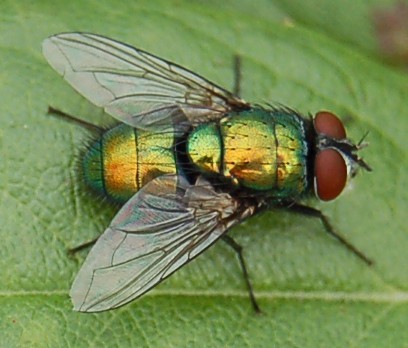
Flies are found throughout the world except Antarctica. There are many different species of fly that inhabit different parts of the world.
Flies have a mobile head, with a pair of large compound eyes, and mouth parts that was made for piercing, sucking, or for lapping. Their wing arrangement gives them great maneuverability in flight, and claws and pads on their feet enable them to cling to smooth surfaces.
The adult stage is usually short, its function only to mate and lay eggs.
Normally, the eggs hatch within 24 hours. Fly larvae, better known as maggots, appear similar to whitish worms. Their only purpose is to eat and store energy for their upcoming transformation. Larvae feed for around five days, after they find a dry, dark location for pupal development. The entire life cycle of a fly from egg to adult is 14-36 days.
A new adult fly has at most 3 months to reproduce before it dies. Each female can lay up to 900 eggs during her brief life. With so many predators, the average lifespan is about 21 days.
Fly Species in Your Area
Habitat
Flies can be found almost anywhere. Adults of many species are strong fliers, which helps them locate supplies of food for their larvae. Fly larvae are most common in damp habitats, and flies populations are largest in warm humid places with lots of moisture.
Threats
Flies are nuisance seasonal pests. When cold weather approaches, they look for protected areas for the winter. On the exterior, they gather on roofs of buildings, wall corners, cracks, crevices, or any other opening found. Once inside they may be found under clothing in closets, under curtains, behind pictures and furniture. They also may leave their hiding areas and appear on sunny warm days in winters. Most flies do not cause damage or bite. If crushed, they leave a greasy mark on the surface.
Habits
Flies are attracted to light and will fly towards and into lights and windows. They often drop to the floor on their backs and spin around and buzz noisily until exhausted. The annoyance of flies usually begins when the weather begins to warm and may continue until mid-spring. In the late summer to early fall (depending on the temperature), the adults look for sheltered areas usually in the sunny sides of buildings for the winter season.
Fly Prevention
In the summer and before late fall or early winter, seal or caulk crack, crevices, voids and all possible entry openings in and around your structure. Also, you will need to screen windows and doors.
Expert Pest Program
Expert Pest will perform a thorough inspection on the exterior and interior of your structure by a trained professional. We will locate all problem areas and properly identify the pest you are having.
All programs are specially designed to target the pest that is infesting your structure.
CLICK HERE FOR OUR FLY PROGRAM
OR
CLICK HERE TO EMAIL US
Memberships & Certifications